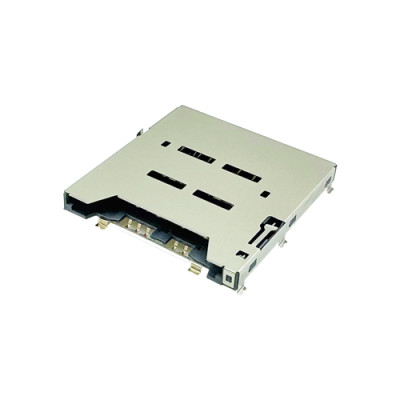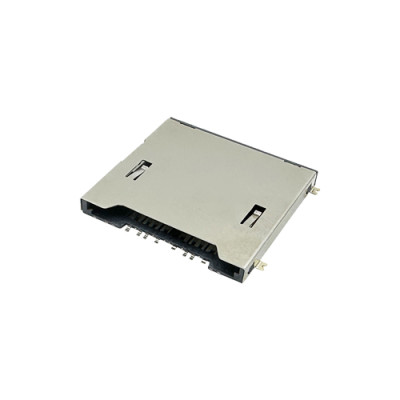
How to Choose the Right SD Card Connector: A Complete Engineering Selection Guide
How to Choose the Right SD Card Connector: A Complete Engineering Selection Guide
Introduction
Choosing the right SD card connector is an important step in electronic product design. Although it may seem like a small component, the connector directly affects data transmission, mechanical reliability, user experience, and the overall performance of the device.
Different applications have different requirements. Consumer electronics may prioritize compact dimensions and convenient card replacement, while industrial and automotive equipment often require greater durability, stable electrical contact, and resistance to vibration and temperature changes.
With various connector types, mounting styles, and technical specifications available, how can engineers select the right solution?
This guide explains the key factors to consider when choosing an SD card connector, helping you make a more informed decision for your next electronic design project.
1. Understand the Different Types of SD Card Connectors
The first step is choosing the appropriate connector mechanism. Different designs offer different advantages in terms of operation, space requirements, and mechanical stability.
1.1 Push-Push SD Card Connector
A Push-Push connector uses a spring-loaded mechanism to insert, lock, and eject the SD card. Users push the card inward to secure it and push it again to release it.
Key advantages:
Convenient card insertion and removal
Integrated card locking and ejection mechanism
Suitable for products requiring frequent card replacement
Push-Push connectors are commonly used in consumer electronics, industrial devices, and other equipment where easy card access is important.
A Push-Pull connector has a simpler operating structure. Users manually insert the card and pull it out when removal is required.
Key advantages:
Relatively simple mechanical design
Suitable for compact PCB layouts
No spring-based ejection mechanism required
This type can be a practical choice for devices where card replacement is less frequent or where a straightforward mechanical structure is preferred.
1.3 Hinged SD Card Connector
A hinged connector uses a movable cover to secure the memory card in place. The card is inserted into the connector and held by closing the hinged cover.
Key advantages:
Provides additional mechanical card retention
Can offer stable positioning when properly designed
Suitable for applications where card security is a priority
Hinged connectors may be considered for industrial equipment and other applications where mechanical stability is important. Actual vibration performance should always be confirmed through model-specific testing.
1.4 Tray-Type SD Card Connector
Tray-type connectors use a removable tray to hold the memory card. The tray is inserted into the device and secured within the connector.
This design is useful when the product requires a structured card-loading mechanism. However, engineers should consider the additional space and mechanical components required by the tray.
2. Check Dimensions and PCB Mounting Requirements
Mechanical compatibility is one of the most important considerations when selecting an SD card socket.
A connector that does not fit the available PCB space or product enclosure can lead to costly design changes during development.
Before selecting a model, check the following specifications:
Connector height:Determines how much vertical space the connector occupies.
Overall dimensions:Must match the available PCB area and enclosure design.
PCB footprint:Confirm pad positions, pin spacing, and soldering requirements.
Mounting direction:Check whether a top-mount or bottom-mount design is required.
Mounting method:Determine whether SMT or through-hole mounting is more suitable.
Card insertion clearance:Ensure sufficient space for users or assembly equipment to insert and remove the card.
Why Is a Low-Profile SD Card Connector Important?
As electronic products become thinner and smaller, low-profile connectors are increasingly important.
A compact SD card connector can help engineers reduce device thickness and optimize internal space. However, choosing the lowest-profile option is not always the best solution.
The connector must still provide sufficient mechanical strength, reliable card retention, and compatibility with the PCB assembly process.
Always review the manufacturer's dimensional drawings and recommended PCB layout before finalizing your design.
3. Evaluate Electrical Performance and Data Transfer Requirements
Electrical compatibility is another critical factor, especially for products that handle large amounts of data.
Different SD card standards support different bus technologies and theoretical transfer speeds.
| SD Interface | Technology | Theoretical Maximum Bus Speed |
| UHS-I | SD interface | 104 MB/s |
| UHS-II | Additional high-speed contacts | 312 MB/s |
| SD Express 7.0 | PCIe Gen3 x1 | Approximately 985 MB/s |
SD Express 8.0 | PCIe Gen4 x2 | Approximately 3,940 MB/s |
These figures represent theoretical interface capabilities, not guaranteed real-world transfer speeds.
When selecting an SD card connector for a high-speed application, engineers should evaluate:
Contact design and electrical specifications
Signal integrity and impedance requirements
Contact resistance
PCB trace routing and layout
Compatibility with the target SD card standard
It is important to confirm that the connector is specifically designed and qualified for the intended interface. A connector's physical compatibility alone does not guarantee high-speed electrical performance.
For high-speed storage applications, early communication between the connector manufacturer and the engineering team can help reduce design risks.
4. Consider Durability and Operating Environment
An SD card connector may experience repeated insertion and removal during its service life. In industrial and automotive applications, it may also be exposed to vibration, shock, and temperature fluctuations.
Therefore, engineers should evaluate more than just the initial electrical performance.
4.1 Insertion and Withdrawal Cycles
The rated mating-cycle life indicates how many insertion and withdrawal operations a connector is designed to withstand under specified test conditions.
Common ratings vary by product model. Some connectors are designed for 5,000 cycles, while others may support 10,000 cycles or more.
Choose a connector based on the expected frequency of card replacement and the required product lifespan. Always verify the rated cycle life in the product datasheet.
4.2 Contact Materials and Plating
Contact materials and surface plating influence electrical conductivity, contact resistance, and corrosion performance.
Gold plating is commonly used on connector contact areas because of its corrosion resistance and stable electrical contact characteristics. Other plating options may be suitable depending on the application, cost target, and performance requirements.
Engineers should review the manufacturer's material specifications rather than selecting a connector based on appearance alone.
4.3 Temperature and Vibration Resistance
Industrial and automotive devices may operate under more demanding environmental conditions than ordinary consumer electronics.
When selecting a connector for these applications, check:
Operating temperature range
Vibration and mechanical shock performance
Card retention structure
Contact stability under environmental stress
Applicable product qualification and test reports
A connector intended for harsh environments should be validated under conditions representative of the final product.
5. Match the SD Card Connector to Your Application
The ideal connector depends on the product's design priorities and operating environment.
| Application | Recommended Selection Priorities |
| Consumer electronics | Compact size, convenient card replacement, and cost |
Industrial equipment | Durability, stable electrical contact, and temperature range |
Automotive electronics | Vibration resistance, temperature performance, and reliability testing |
IoT devices | Small footprint, low profile, and space optimization |
| High-speed storage devices | Interface compatibility and signal integrity |
For example, a portable consumer device may benefit from a compact Push-Push SD card connector that offers convenient card replacement.
An industrial control system may require a more robust mechanical design with verified vibration performance and a suitable operating temperature range.
For high-speed data storage equipment, engineers should prioritize electrical compatibility and signal integrity rather than focusing only on connector dimensions.
Defining these requirements early can help narrow down suitable models and reduce unnecessary design modifications.
6. Standard or Customized SD Card Connector?
Standard SD card connectors are often sufficient for common electronic applications. They can simplify component selection and shorten the development process.
However, some projects have specific requirements that standard products cannot fully meet.
A customized SD card connector may be worth considering when you need:
A special connector height or overall dimension
A specific mounting direction
A modified mechanical structure
A particular card retention mechanism
Compatibility with an existing PCB footprint
Application-specific material or plating options
Before starting customization, prepare your PCB layout, mechanical drawings, card specifications, and target operating conditions.
Working with an experienced connector manufacturer during the early design stage can help evaluate feasibility, optimize the structure, and avoid potential assembly problems.
7. Why Choose MOARCONN as Your SD Card Connector Manufacturer?
Choosing the right manufacturer is just as important as choosing the right connector.
MOARCONN specializes in memory card connectors, including SD card, Micro SD card, SIM card, and smart card connectors.
With in-house engineering and manufacturing capabilities, MOARCONN supports customers from product selection and design evaluation to sample development and mass production.
Key advantages include:
Wide Product Selection: Multiple SD card connector configurations, including Push-Push and Push-Pull designs.
Customization Support: Engineering assistance for specific dimensions, mounting requirements, and mechanical designs.
Engineering Expertise: Support with product selection, design evaluation, and development.
Manufacturing Capabilities: Production and quality control processes designed to support different project requirements.
Application Experience: Connector solutions for consumer electronics, industrial equipment, automotive electronics, and other applications.
Whether you need a standard SD card connector or a customized design, MOARCONN can help evaluate your requirements and identify a suitable solution.
Explore the product range at www.moarconn.com.
Conclusion
Choosing the right SD card connector requires careful consideration of connector type, mechanical dimensions, electrical performance, durability, and application requirements.
By evaluating these factors during the early design stage, engineers can improve product reliability, reduce compatibility risks, and avoid unnecessary redesign costs.
If you are looking for a reliable SD card connector manufacturer, MOARCONN offers standard products, customization support, and engineering assistance to help bring your electronic product designs to life.
Contact MOARCONN today to discuss your SD card connector requirements.