Nano SIM Card Connectors — Technical Specifications & Performance Parameters
Nano SIM Card Connectors — Technical Specifications & Performance Parameters
Ultimate Guide for Engineers & Product Designers | Moarconn
📌 Introduction
Nano SIM Card Connectors are a critical interface component in modern mobile devices, IoT systems, and embedded communication terminals. Their design, durability, and electrical performance directly impact signal integrity, device reliability, and user experience.
At Moarconn, we specialize in advanced connector solutions including Nano SIM Card Connectors that meet stringent industry performance standards while providing engineering-grade reliability for high-volume production.
🧠 What Are Nano SIM Card Connectors?
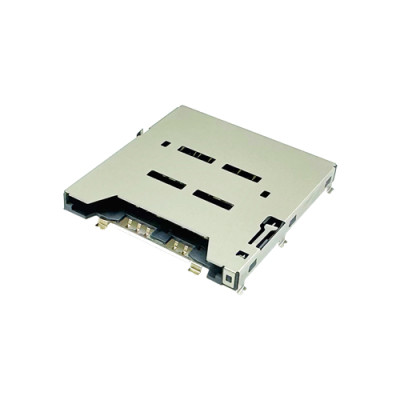
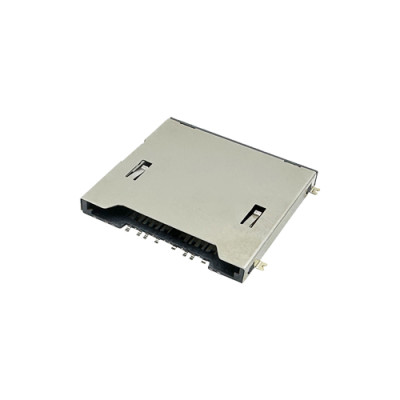
A Nano SIM Card Connector is a PCB-mounted electrical interface designed to securely hold and connect a Nano SIM (4FF) card to the device’s communication subsystem. These connectors are engineered with tight tolerances, reliable contact force, and optimized electrical characteristics to support GSM, LTE, 5G and IoT modem integration.
Nano SIM Size Reference:
Standard Nano SIM card size: 12.3 × 8.8 × 0.67 mm
Connector profiles vary typically between 1.10 mm to 1.44 mm depending on design requirements
⚙️ Technical Specifications — What Engineers Must Know
Below are the core Nano SIM Card Connector technical specifications and performance parameters that electrical and design engineers should evaluate.
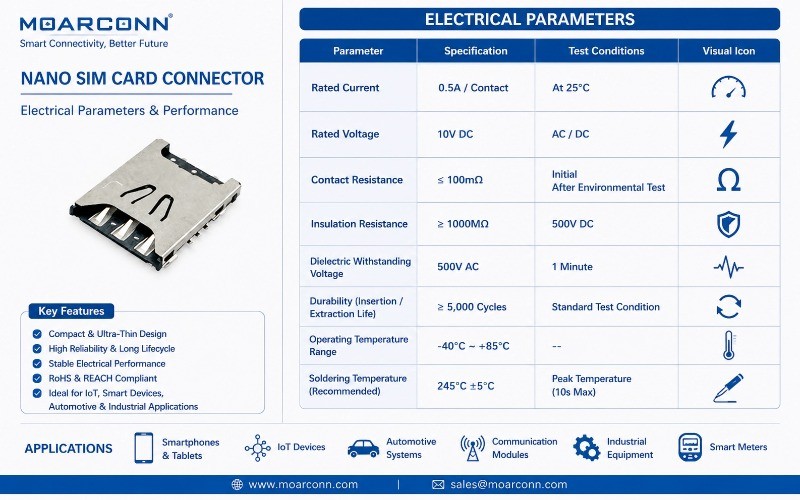
✅ Electrical Specifications
Parameter Typical Value Notes
Rated Voltage 10–30V Depending on connector series
Rated Current Up to 0.5 A Per contact
Contact Resistance ≤ 100 mΩ Affects signal integrity
Insulation Resistance ≥ 1000 MΩ Reliability under humidity
Dielectric Withstanding Voltage 500–1000 V AC Product safety standard
These values align with industry expectations, such as JAE’s Nano SIM Connector series specification where typical resistance and voltage ratings are documented for both tray type and push-push type connectors.
🛠 Mechanical Performance
Mechanical characteristics define how the connector performs under repeated use and physical stress:
Profile Height (Connector Thickness):
Ultra-thin options designed for modern slim device form factors
Insertion / Ejection Cycles:
Typical durability rated for ≥ 5,000 cycles
Contact Force:
Engineered to balance solid electrical contact with minimal wear
According to JAE’s product release, ultra-slim Nano SIM connectors are engineered with compact height while maintaining durability — critical for smartphones and ultra-compact IoT devices.
🌡 Environmental & Reliability Parameters
Connector durability isn’t just electrical or mechanical — environmental resilience is equally essential:
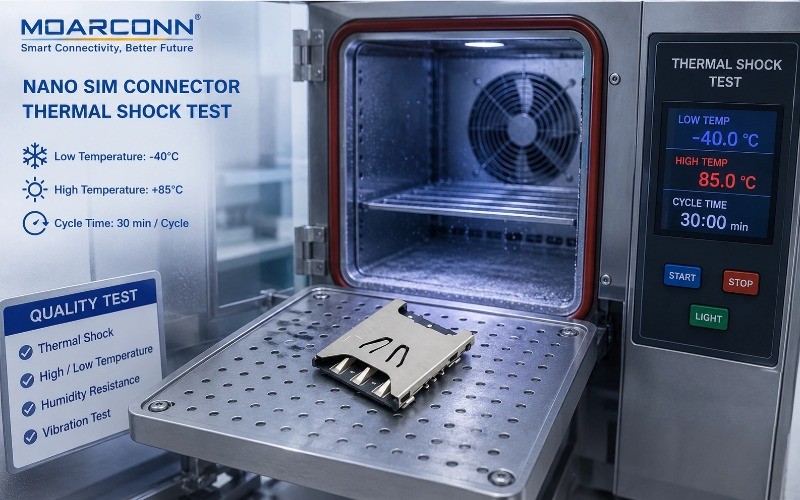
Operating Temperature: −40°C to +85°C
Humidity Resistance: Designed for high moisture tolerance
Vibration & Shock: Meets industry vibration resistance standards
Gold-plated Contacts: Prevent corrosion and maintain low resistance over lifespan
Performance under harsh conditions is crucial in automotive telematics, industrial modules, and outdoor IoT applications.
🔍 Nano SIM Connector Design Types & Features
Different connector designs cater to specific engineering needs:
🔹 Tray (Extractor/Retractor) Type
Ideal for devices with external SIM trays — common in smartphones.
🔹 Push-Push Type
Internal SIM design — user pushes the card to lock and pushes again to eject.
🔹 Push-Pull Type
Traditional spring-loaded design providing robust contact and easy removal.
Each design has electrical and mechanical trade-offs. For example, push-push connectors often require stronger springs which influence contact resistance and overall profile height.
🧩 Moarconn’s Nano SIM Connector Advantage
At Moarconn (www.moarconn.com), our engineering team integrates industry best practices with custom capabilities to deliver connectors optimized for performance, manufacturability, and field reliability:
✔ Precision-engineered contact geometry for consistent signal performance
✔ Multiple profile heights for versatile product design
✔ High insertion cycle durability for rugged applications
✔ RoHS compliant & available with advanced plating options
✔ Customized connector solutions based on your PCB specifications
We support engineers at every stage — from initial specification review to design-for-manufacturing (DFM) and mass production readiness.
🧰 Design & Engineering Best Practices
PCB Footprint & Routing
Ensure correct pad geometry according to manufacturer datasheets
Minimize high-speed signal path lengths
Maintain ground reference plane integrity
Reliability Enhancement Tips
Use gold plating on critical contact areas
Control solder fillet coverage during reflow
Avoid unnecessary board flex at connector mounting zones
These guidelines reflect real-world learnings from TE Connectivity and Moarconn technical notes.
📈 Choosing the Right Nano SIM Connector for Your Application
When specifying a connector, consider:
🔹 Electrical environment — current and voltage demands
🔹 Mechanical usage — insertion cycle expectations
🔹 Environmental exposure — temperature, vibration
🔹 Form factor constraints — device thickness, footprint limits
Our team at Moarconn can assist in evaluating these parameters and recommending the ideal connector from our product portfolio.
📞 Contact Moarconn
Want detailed technical support or product samples?
👉 Visit: www.moarconn.com
👉 Email: sales@moarconn.com
👉 Request a quote or custom engineering consultation
🚀 Summary
This guide provided a comprehensive view of Nano SIM Card Connector technical specifications and performance parameters — essential for engineers, product designers, and procurement teams. From electrical ratings to mechanical durability and environmental resilience, understanding these parameters ensures your device performs reliably throughout its lifecycle.
By combining industry sources like TE Connectivity, JAE and Moarconn’s real-world engineering expertise, this page helps engineers make informed decisions while promoting Moarconn’s value proposition in high-precision connector solutions.