SIM Card Connector Types Explained for Vehicle Designers Push-Push, Hinged, Tray & More
What Is a SIM Card Connector?
A SIM card connector is a mechanical and electrical interface that connects a SIM card to the PCB, allowing the cellular module to access the mobile network. In automotive applications, SIM card connectors must deliver consistent electrical contact while maintaining mechanical stability under harsh conditions.
Key automotive requirements include vibration resistance, reliable contact force, wide operating temperature range, and long insertion cycle life.
Push-Push SIM Card Connectors
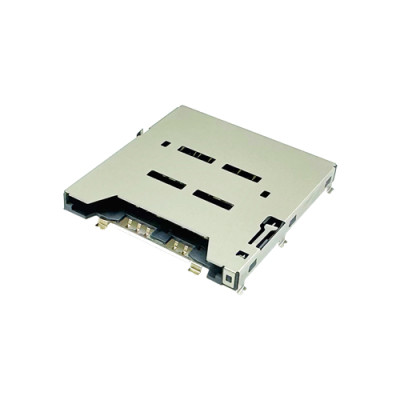
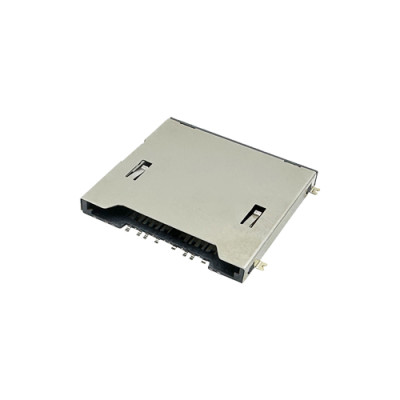
Push-push SIM card connectors use a spring-loaded mechanism. The SIM card is inserted by pushing it in, and ejected by pushing again. This design is popular in applications where user-friendly operation is required.
However, the internal spring mechanism introduces moving parts, which may be more sensitive to long-term vibration if not properly designed for automotive use.
Typical applications include infotainment head units and serviceable communication modules.
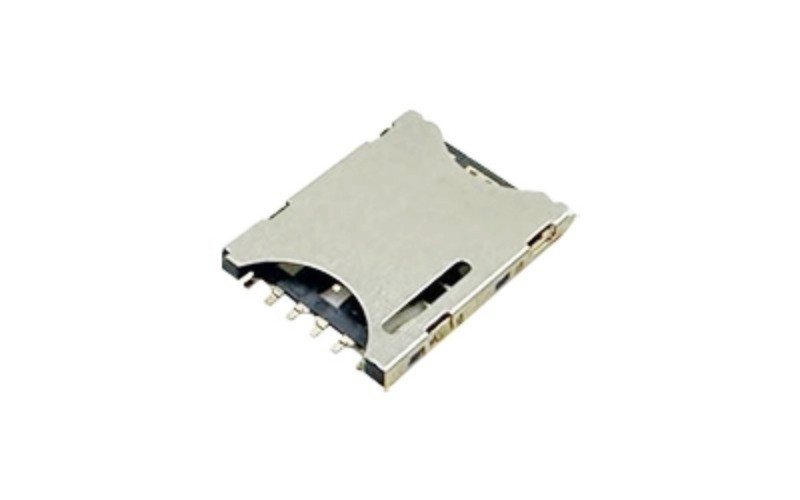
Push-Pull SIM Card Connectors
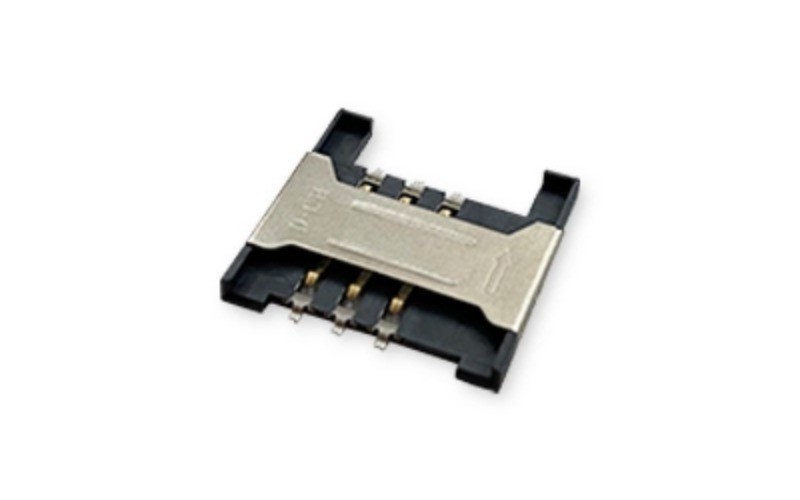
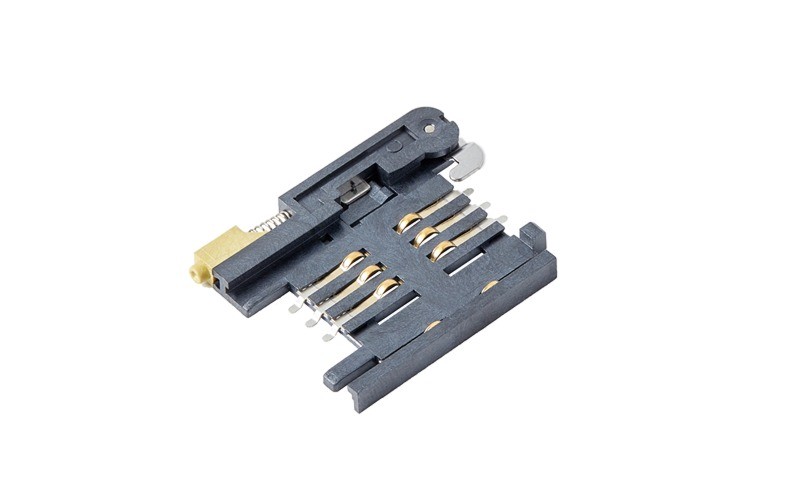
Push-pull SIM card connectors feature a simple mechanical structure without an automatic ejection mechanism. The SIM card is manually inserted and removed.
This simplicity makes push-pull connectors highly reliable in vibration-heavy environments and a popular choice for embedded automotive modules where SIM cards are rarely replaced.
Typical applications include telematics units, fleet tracking devices, and industrial vehicle electronics.
Hinged SIM Card Connectors
Hinged SIM card connectors use a hinged cover that opens to insert the SIM card and locks it securely in place. This design provides excellent mechanical retention and contact stability, making it ideal for harsh automotive environments.
Although hinged connectors require slightly more PCB space, they are widely used in safety-critical and long-life automotive systems.
Typical applications include TCUs, ADAS communication modules, and off-road vehicles.
Tray / Drawer SIM Card Connectors
Tray-type SIM card connectors use a removable tray or drawer mechanism. This structure provides excellent mechanical stability and is well suited for sealed or externally accessible automotive modules.
They are commonly used in ruggedized designs where protection against vibration and environmental stress is critical.
How Vehicle Designers Should Choose SIM Card Connectors
When selecting SIM card connectors for automotive applications, designers should focus on vibration exposure, temperature range, serviceability requirements, PCB layout constraints, and expected product lifespan.
Matching the connector type to the actual vehicle use case is more important than choosing the most convenient structure.
Why Choose Moarconn SIM Card Connectors
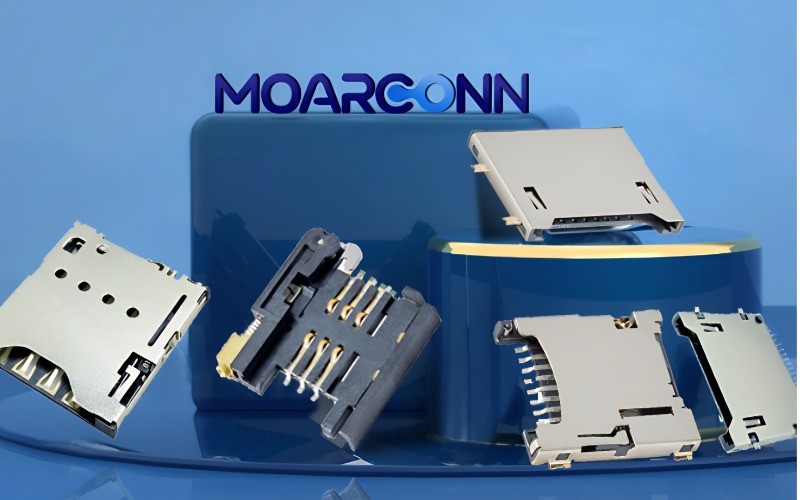
At Moarconn (www.moarconn.com), we design and manufacture automotive-grade SIM card connectors engineered for long-term reliability in harsh environments.
Our product portfolio includes push-push, push-pull, hinged, and tray SIM card connectors, supporting automotive telematics, IoT, and industrial vehicle applications.
Conclusion
Understanding different SIM card connector types allows vehicle designers to build more reliable and future-proof communication systems. Selecting the right connector is a foundational step toward stable automotive connectivity.
Learn more at www.moarconn.com