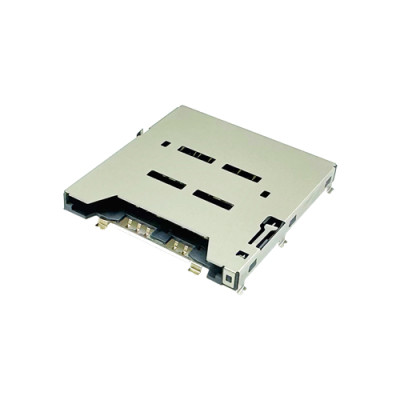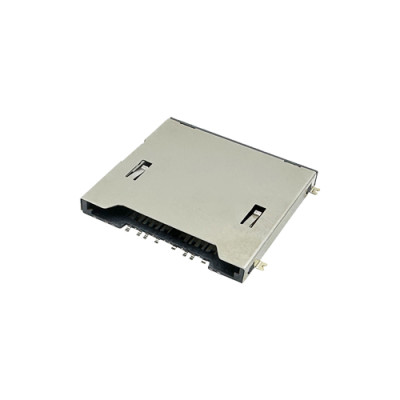
The Ultimate Procurement Checklist: How to Scientifically Evaluate and Choose Your SD Card Connector
In a precision testing laboratory of a connector manufacturing plant, an engineer is conducting the final insertion and extraction force test on a batch of SD card sockets. A display beside them shows real-time contact resistance data—these precise measurements at the millimeter level determine the reliability foundation for tens of thousands of electronic devices.
As the global demand for data storage in electronic devices continues to grow, the SD card connector, as a critical bridge for data transmission, directly impacts the performance and reliability of end products. Industry data indicates that over 35% of electronic device failures can be traced back to connector issues.
Numerous suppliers in the market claim to provide "high-quality" products, but how can you distinguish the genuine from the false and find a truly reliable partner?
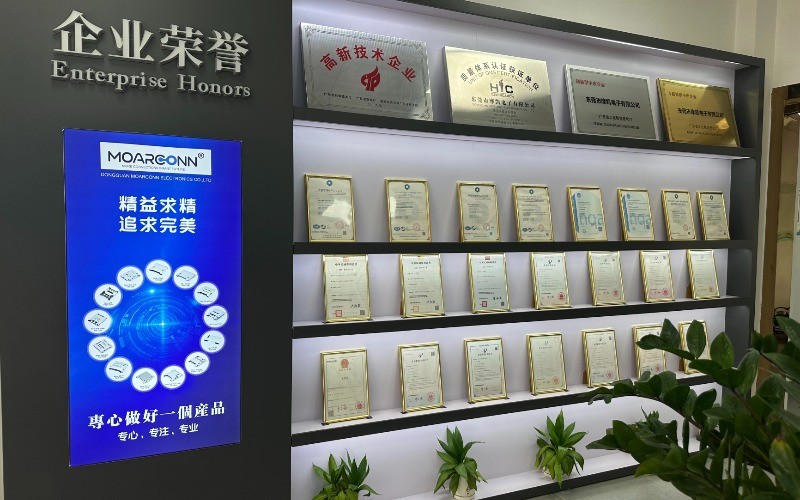
Assessment Foundation: Building a Four-Dimensional Supplier Screening Framework
Selecting an SD card connector supplier is not a simple price comparison; it is a systematic project. We have integrated industry standards and business practices to construct an evaluation framework covering four dimensions: qualifications, product, production, and service.
First, qualification verification is the basic threshold. Check if potential suppliers hold ISO9001 Quality Management System certification. For automotive or medical fields, additional professional certifications such as IATF16949 or ISO13485 must be examined.
Whether a supplier has its own laboratory is crucial, as this directly relates to its ability to independently complete testing and validation of key parameters like IP rating, temperature resistance performance (typically required from -40°C to 125°C), and insertion/extraction lifespan.
Next, on-site assessment of production scale is necessary. Visit the supplier's injection molding, assembly, and testing workshops. Reputable manufacturers should have fully automated production lines. Observe the manufacturing precision of terminals; excellent suppliers can control errors within 0.02mm, which is the foundation for ensuring the long-term stability of connectors.
Quality Deconstruction: Core Performance Evaluation Metrics for Connectors
Once basic qualifications are confirmed, the next step is to deeply deconstruct the quality dimensions of the product itself. This requires going beyond the parameters on brochures and conducting practical verification.
Material analysis is the primary step. High-quality SD card connector contacts should use beryllium copper alloy with a gold plating thickness ≥0.8μm, not ordinary copper. The housing material should be flame-retardant PA66, not ordinary plastic.
In this regard, professional suppliers like MoarConn use materials that meet high industry standards, ensuring excellent performance in conductivity, corrosion resistance, and flame retardancy.
Performance testing must be conducted on-site. It is advisable to purchase 10-20 samples for testing under simulated actual working conditions, focusing on verifying the insertion/extraction force. SD card connectors of different specifications need to maintain a specific insertion/extraction force range, typically between 30-50N, ensuring they are neither too loose (causing poor contact) nor too tight (causing user difficulty).
Electrical performance verification is indispensable. Use professional equipment to measure the contact resistance between connector terminals to ensure signal transmission efficiency; perform insulation resistance tests to prevent short circuits and leakage issues.
Withstand voltage testing examines the product's safety performance in high-voltage environments. Suppliers should be required to provide test reports from third-party authoritative institutions (such as SGS) for this data.
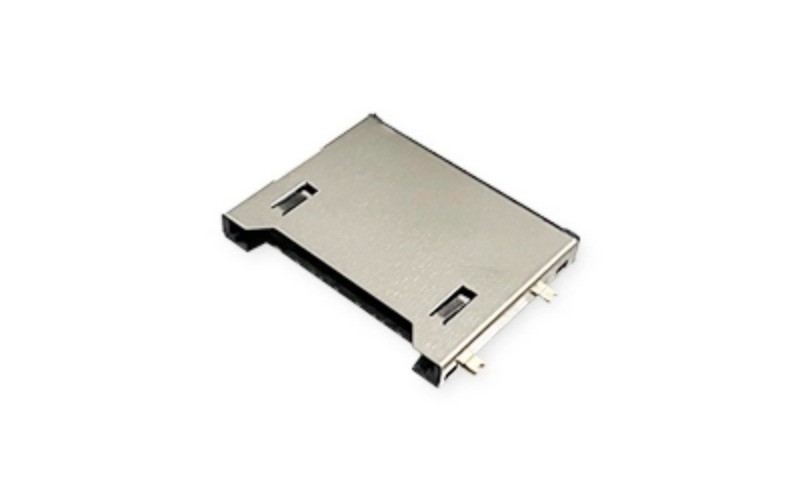
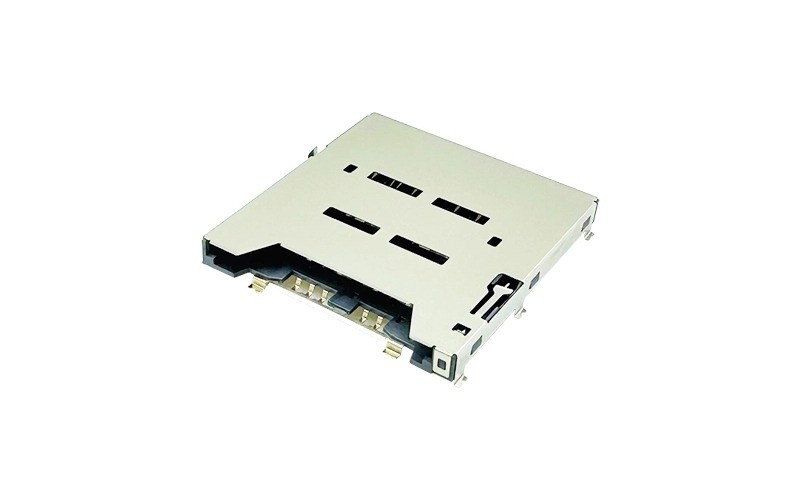

Professional Depth: Special Considerations for Memory Card Connectors
As a specific functional component, SD card connectors have unique technical requirements. This demands that suppliers possess specialized domain knowledge and experience.
Standardization and compatibility are primary considerations. Supplier products must strictly adhere to the standard specifications set by the SD Association, ensuring full compatibility with various types of SD and microSD memory cards. During evaluation, suppliers can be asked to provide compatibility test reports with mainstream brand memory cards.
Transmission performance is a core indicator. With the development of storage technology, the SD Express standard supports the PCIe interface, providing higher transfer speeds. Suppliers should be able to provide a full range of products supporting UHS-I, UHS-II, and even the latest SD Express standards.
Taking MoarConn as an example, its product line comprehensively covers various specifications from traditional SD to the latest high-speed standards, capable of meeting the differentiated data transmission speed requirements of different devices.
Environmental adaptability cannot be overlooked. Depending on the device's application scenario, connectors may need to withstand extreme temperatures, high humidity, or salt spray environments. Professional suppliers will provide environmental test data for their products, such as temperature cycling test, damp heat test, and salt spray test results.
Hidden Value: Assessing Supplier Service and Comprehensive Capabilities
The quality of the product itself is only part of the consideration when choosing a supplier. The service and comprehensive capabilities they provide often determine the smoothness of long-term cooperation.
Customization capability is a key indicator distinguishing supplier levels. When standard products cannot meet specific needs, can the supplier provide customized solutions? From product structure modifications to adding special functions, how fast is their response?
Professional suppliers like MoarConn provide one-stop customization services from design support to rapid sample production. They can offer technical support even when the client only has a concept, provide quotations within 48 hours when design drawings are available, and complete the entire process from design to mold making within 25 days.
The technical response and support system is equally important. Evaluate the response speed of the supplier's technical team, and whether they can provide comprehensive technical documentation, 3D models, and product application guidance. Excellent suppliers may even offer market analysis and product compatibility consulting, becoming an extension of the client's product development team.
Supply chain stability directly impacts production plans. Understand whether the supplier's raw material procurement channels are stable and if they have backup plans to cope with sudden shortages. Are their capacity and delivery time commitments reliable? Can they flexibly respond to order fluctuations?
Cost Intelligence: Comprehensive Value Assessment Beyond Unit Price
In procurement decisions, price is an important but not the only consideration. True cost intelligence lies in assessing the "Total Cost of Ownership" rather than simply comparing unit prices.
Quality cost is often overlooked. Low-quality connectors can lead to device failures, increased after-sales repair costs, and even damage to brand reputation. According to industry cases, after adopting high-quality connectors, some home appliance manufacturers saw a 35% increase in production line assembly efficiency and a 28% decrease in after-sales failure rates.
Time cost is equally important. The reliability of a supplier's delivery time and the speed of sample provision directly impact product development cycles. MoarConn can provide the first sample within 20 days after receiving the client's design drawings, significantly shortening time-to-market.
Minimum Order Quantity (MOQ) is particularly critical for small and medium-sized enterprises. Flexible order policies can help clients control inventory costs. Professional suppliers offer low MOQ options, supporting small-batch trial production and flexible replenishment strategies.
Risk Avoidance: Common Pitfalls and Countermeasures in Connector Procurement
The connector supplier market is mixed, and during the procurement process, it is necessary to be vigilant against common traps to protect corporate interests.
False material claims are one of the most common traps. Some suppliers may use gold-plated copper to impersonate solid gold, which severely affects product lifespan and conductive performance. The countermeasure is to require suppliers to provide material analysis reports or conduct random sampling tests using XRF spectrometers.
Parameter exaggeration is also widespread. Parameters advertised by suppliers, such as insertion/extraction lifespan and transfer speed, may be exaggerated. The solution is to require third-party test reports and conduct sampling verification tests.
The risk of certification forgery needs vigilance. Besides checking certificate copies, verify the certificate's validity by consulting the official website of the certification body. For connectors used in special fields like automotive or medical, the authenticity of certification is even more critical for product safety and compliance.
Standing at the forefront of the electronics manufacturing industry, the selection of SD card connectors has become a key factor affecting product competitiveness. From basic qualification audits to in-depth performance verification, from product standardization to service customization, each step requires scientific methods and professional judgment.
Excellent suppliers like MoarConn not only provide reliable products that meet standards but can also become partners in their clients' technological innovation, jointly facing the rapidly changing market challenges.
When you hold this complete evaluation checklist, you will be able to systematically screen partners, injecting more value and reliability into end products while ensuring supply chain resilience.