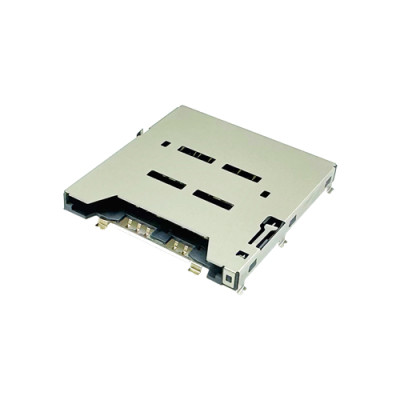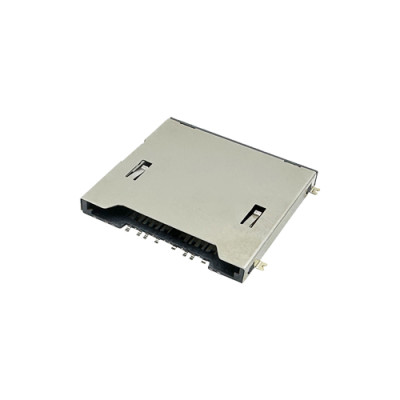
Ultimate Guide to Selecting TF Card Connectors for Notebooks & Laptops (2026)
Introduction: Why TF Card Connectors Still Matter in Modern Notebooks
Despite the rapid growth of cloud storage and USB-C peripherals, TF card connectors (microSD connectors) remain an essential component in many notebooks and laptops. They provide a compact, cost-effective, and user-friendly solution for storage expansion, data transfer, diagnostics, and system recovery.
For notebook manufacturers and hardware engineers, choosing the right TF card connector directly impacts user experience, mechanical reliability, device thickness, and long-term product stability.
This guide offers a practical, engineer-focused approach to selecting TF card connectors for notebooks and laptops in 2026.
What Is a TF Card Connector?
A TF card connector is a mechanical and electrical interface that allows a TF (TransFlash) or microSD card to connect to a host PCB. Its core functions include secure electrical contact, guided insertion, mechanical retention, and optional card-detect switching.
Although “TF” and “microSD” are often used interchangeably, TF card connectors remain a common industry term in engineering drawings and BOMs.

Common TF Card Connector Types Used in Notebooks
Push-Push TF Card Connectors
Push-push connectors allow one-touch insertion and ejection, offering a better consumer experience. However, their internal spring mechanism is more complex.
Best for: Consumer laptops, ultrabooks with frequent card usage.
Push-Pull TF Card Connectors
Push-pull connectors require manual removal. Their simpler structure offers higher mechanical stability and lower failure risk.
Best for: Thin notebooks, business laptops, cost-sensitive designs.
Hinged / Flip-Top TF Card Connectors
Cards are placed before closing the cover, ensuring extremely stable contact but poor user accessibility.
Best for: Industrial notebooks, internal service slots.
Key Selection Criteria for Notebook TF Card Connectors
Mechanical Height & Space Constraints
Modern notebooks demand ultra-low-profile TF card connectors, often below 1.4 mm in height. Designers must consider Z-height, EMI shielding clearance, and card insertion angles.
Durability & Insertion Life
Notebook TF card connectors are typically designed for 5,000–10,000 insertion cycles, with gold-plated contacts preferred for wear resistance.
Mounting Type & PCB Stability
Most notebook designs use SMT TF card connectors with reinforced solder tabs and optional locating pegs.
Electrical Performance & Signal Integrity
High-speed cards require controlled impedance routing, short trace lengths, and proper ESD protection near the connector.
Compatibility with TF / microSD Standards
A qualified TF card connector should support microSD, microSDHC, microSDXC, and UHS-I signaling commonly used in notebooks.
Notebook Application Scenarios
Notebook Type
Ultrabook
Consumer Laptop
Business Laptop
Industrial Notebook
Recommended Connector
Low-profile push-pull
Push-push with detect switch
Reinforced push-pull
Hinged / covered type
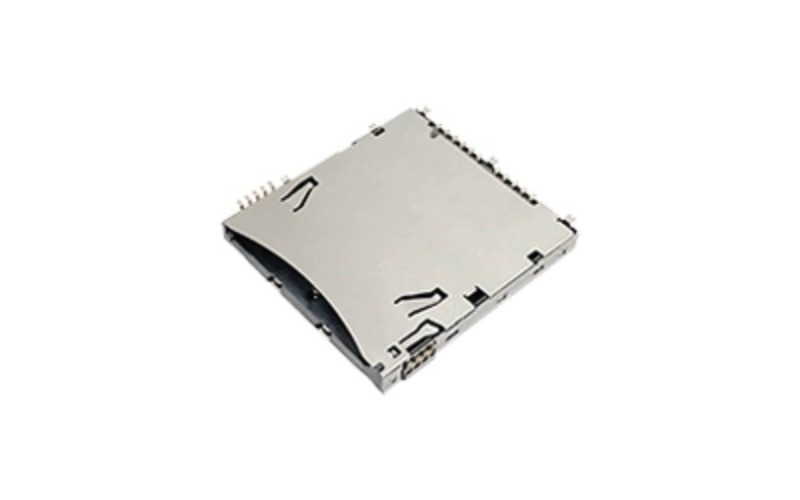
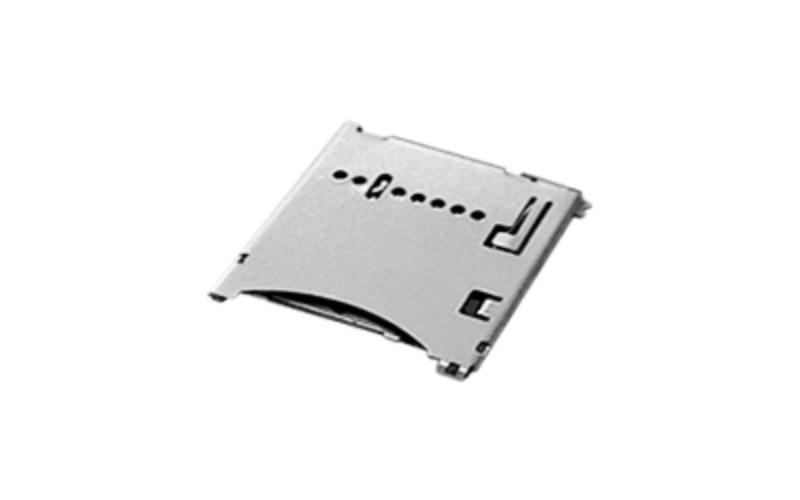
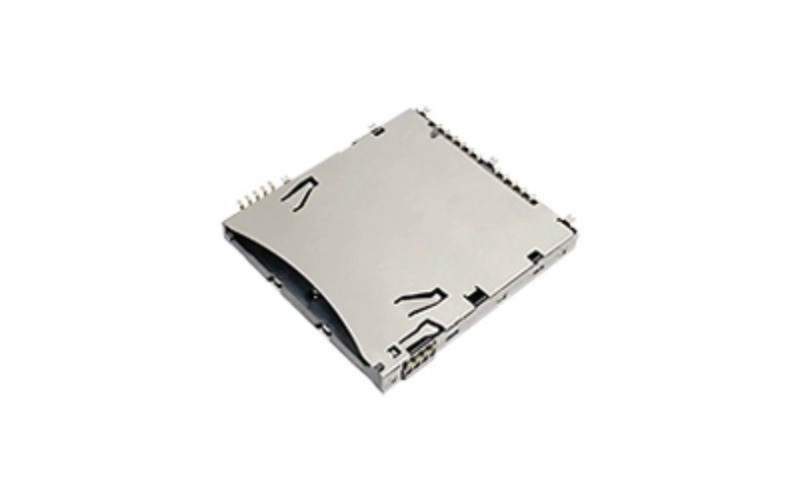
Why MOARCONN TF Card Connectors Are Trusted by Engineers
MOARCONN is a professional connector manufacturer specializing in TF card connectors for thin notebook and laptop applications. Our products focus on mechanical reliability, signal stability, and manufacturability.
MOARCONN Advantages:
• Ultra-low-profile TF card connector designs
• Strict insertion life and retention force testing
• SMT-optimized footprints
• Customization for height, shell, and detect pins
Conclusion
Selecting the right TF card connector for notebooks and laptops requires balancing mechanical design, electrical performance, user experience, and manufacturing reliability. Working with experienced suppliers like MOARCONN helps reduce design risks and ensure long-term product quality.