Testing & Qualification of SD Card Connectors: What Engineers Should Verify Before Production
Introduction
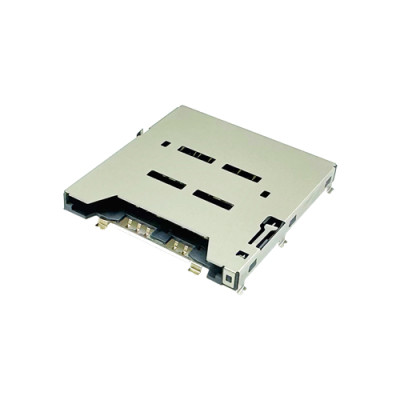
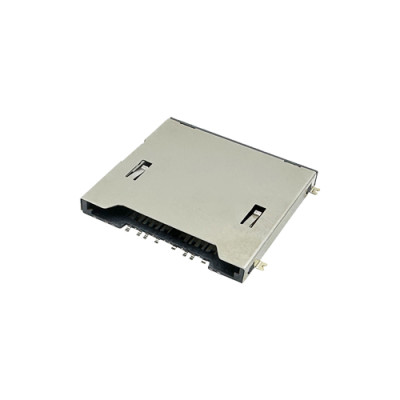
In modern electronic systems, the reliability of an SD card connector directly affects data integrity, device stability, and long-term product lifespan. From industrial control systems and automotive infotainment to UAV imaging devices and embedded edge computing platforms, connector failure can result in data corruption, intermittent disconnection, or complete system downtime.
For hardware engineers, validating an SD card connector before mass production is no longer optional — it is an essential part of product reliability engineering.
This article explores the critical testing and qualification procedures engineers should verify before production release, while also explaining how MOARCONN helps customers improve connector durability, contact reliability, and environmental resistance through customized engineering and precision manufacturing solutions.
Why SD Card Connector Qualification Matters
An SD card connector may appear mechanically simple, but in reality, it operates as a high-frequency electromechanical interface exposed to:
Repeated insertion and extraction cycles
Thermal expansion and contraction
Continuous vibration
Humidity and oxidation
Signal integrity stress
PCB mechanical loading
Many field failures originate not from the memory card itself, but from unstable connector contact systems, solder fatigue, or insufficient retention force.
Industry standards such as IEC 60512 define testing methods for electrical connectors to ensure long-term reliability under real-world operating conditions.
1. Mechanical Endurance Testing
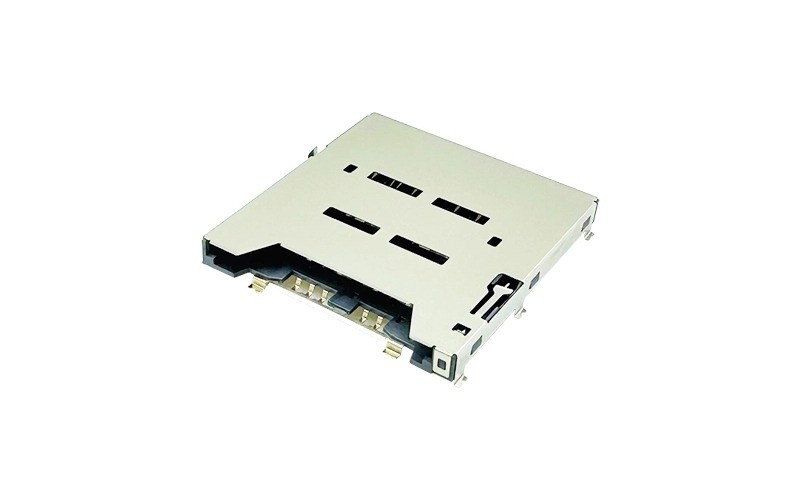
Mechanical endurance testing evaluates whether the connector can maintain stable contact performance after thousands of insertion and removal cycles.
For industrial and automotive applications, engineers typically verify:
Insertion force consistency
Extraction force stability
Contact spring fatigue
Terminal wear
Housing deformation
IEC endurance standards commonly simulate between 5,000 and 10,000 mating cycles.
At MOARCONN, SD card connectors are validated through durability testing systems designed to monitor:
Terminal elasticity degradation
Mechanical retention stability
Long-term insertion consistency
The engineering team optimizes contact spring geometry and terminal material hardness to improve lifecycle durability in harsh applications.
2. Contact Resistance Verification
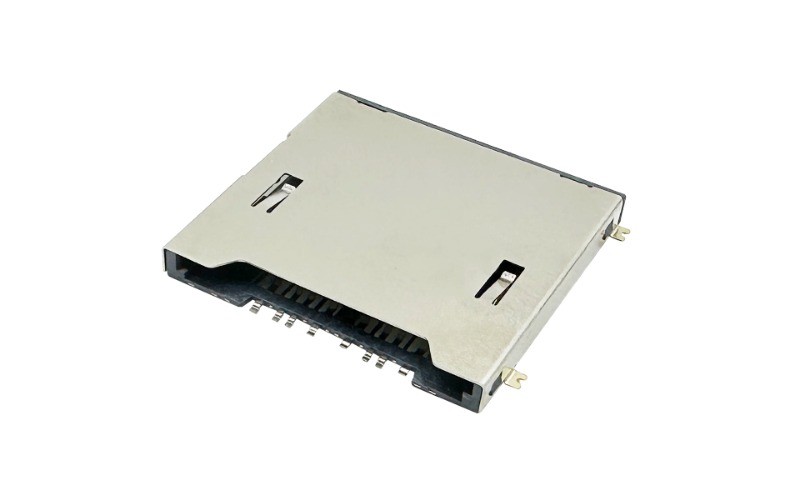
Stable contact resistance is essential for maintaining high-speed data transmission and preventing intermittent signal loss.
Engineers should verify:
Initial contact resistance
Resistance drift after endurance cycling
Resistance stability under vibration
Voltage drop under load
High contact resistance can cause:
Read/write instability
Data corruption
Device recognition failure
Signal attenuation
MOARCONN integrates:
Gold-over-nickel plating
High-hardness copper alloy terminals
Precision stamping processes
to minimize resistance fluctuation and improve long-term electrical stability.
3. Thermal & Environmental Testing
Extreme temperature changes are one of the most common causes of connector failure.
During thermal cycling, different materials expand and contract at different rates, which can lead to:
Plastic housing deformation
Solder joint cracking
Terminal displacement
Reduced contact pressure
Typical qualification tests include:
High-temperature storage
Low-temperature exposure
Thermal shock cycling
Humidity resistance
Salt spray testing
Industrial-grade SD card connectors commonly require operation between -40°C and +105°C.
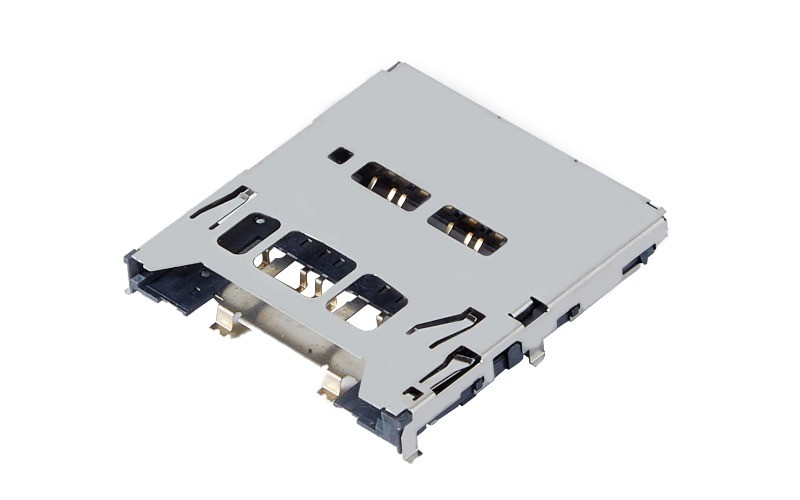
MOARCONN uses high-temperature LCP materials and reinforced structural designs to improve dimensional stability under harsh thermal environments.
4. Vibration & Shock Resistance Testing
In automotive, drone, robotics, and industrial systems, vibration resistance is critical.
Micro-vibration can cause:
Fretting corrosion
Intermittent disconnection
Signal instability
Contact wear
Engineers should verify:
Card retention force
PCB anchoring stability
Electrical continuity during vibration
MOARCONN develops customized anti-vibration SD card connector solutions with:
Reinforced shell structures
Multi-point solder anchoring
Optimized contact spring force
Enhanced retention mechanisms
for UAV, automotive, and industrial control environments.
5. Signal Integrity & High-Speed Performance Testing
Modern SD interfaces such as UHS-I, UHS-II, and SD Express demand much more than simple mechanical connectivity.
At high transmission speeds, engineers must verify:
Impedance matching
Return loss
Insertion loss
Crosstalk
Eye-diagram quality
Signal continuity
MOARCONN integrates signal integrity verification into connector development for SD 7.0 and SD 8.0 high-speed connector platforms.
6. Solderability & PCB Reliability Testing
Connector reliability also depends heavily on solder joint quality.
Engineers should evaluate:
SMT solderability
Reflow resistance
PCB peel strength
Solder joint fatigue
Coplanarity accuracy
MOARCONN performs simulated PCB soldering validation and reflow testing to ensure stable SMT compatibility and reliable PCB retention performance during mass production.
7. Factory Quality Control Before Mass Production
Reliable SD card connectors require not only strong design capability, but also strict manufacturing process control.
Before production approval, engineers should evaluate whether the supplier has:
In-house tooling capability
Automated assembly systems
AOI inspection
Precision stamping capability
Reliability laboratories
Traceability systems
As a professional SD card connector manufacturer, MOARCONN integrates:
Mold design
Precision injection molding
High-speed stamping
Automated assembly
Reliability validation
OEM/ODM customization
within its own manufacturing system to ensure long-term production consistency.
Engineer’s Pre-Production Qualification Checklist
Qualification Item
Mating Cycle Test
Contact Resistance Test
Thermal Cycling Test
Vibration Test
Salt Spray Test
SMT Solderability Test
Signal Integrity Test
Housing Material Verification
Retention Force Test
AOI & QC Inspection Capability
Sample Content
Validate insertion durability
Ensure electrical stability
Verify temperature durability
Prevent intermittent disconnection
Improve corrosion resistance
Ensure PCB assembly quality
Validate high-speed transmission
Prevent thermal deformation
Ensure card holding stability
Improve manufacturing consistency
Why Engineers Choose MOARCONN
MOARCONN specializes in SD, Micro SD, SIM, and Smart Card connector solutions for industrial, automotive, consumer electronics, and embedded applications.
Key engineering advantages include:
Customized SD connector development
High-temperature resistant connector structures
Anti-vibration design optimization
Precision stamping & molding
High-speed SD Express connector capability
Reliability laboratory testing
OEM/ODM engineering support
Flexible customization for industrial projects
Conclusion
Testing and qualification are the foundation of reliable SD card connector performance.
As electronic systems become faster, smaller, and more exposed to harsh operating environments, engineers must carefully validate mechanical durability, signal integrity, thermal resistance, and manufacturing consistency before production release.
For projects requiring durable, customized, and high-reliability SD card connectors, MOARCONN provides engineering-driven solutions designed for real-world industrial and high-performance applications.