
What Operating Voltages Do SIM Card Connectors Support?
SIM card connectors follow the ISO 7816 voltage class system: Class A (5V), Class B (3V) and Class C (1.8V). The card and reader negotiate the class during activation, so the socket must simply handle up to 5V reliably across its rated cycles.
ISO 7816 Voltage Classes
| Class | Operating Voltage | Typical Use |
|---|---|---|
| Class A | 5V | Legacy readers, older industrial terminals |
| Class B | 3V | Most mobile and M2M devices |
| Class C | 1.8V | Modern smartphones, IoT modules, low-power designs |
Modern SIM connectors are designed to carry all three classes: the card negotiates the operating voltage during activation, so the socket itself only needs to handle the maximum of 5V with adequate contact resistance stability. What matters for the designer is current carry rating (typically 0.5A), contact resistance (commonly ≤50 mΩ initial) and insulation resistance (≥1,000 MΩ at 500 VDC).

Design Notes
- Check that the connector's rated voltage and current exceed your module's worst-case supply scenario, including hot-insertion transients.
- For 1.8V-only designs, confirm the SIM module supports Class C signaling to avoid level-shifting complexity.
- Signal integrity for CLK and I/O lines depends more on PCB routing than on the socket; keep traces short with controlled impedance.
See our 6-pin and 8-pin smart card connectors rated for full ISO 7816 voltage classes, or review the C1-C8 pin function table first.
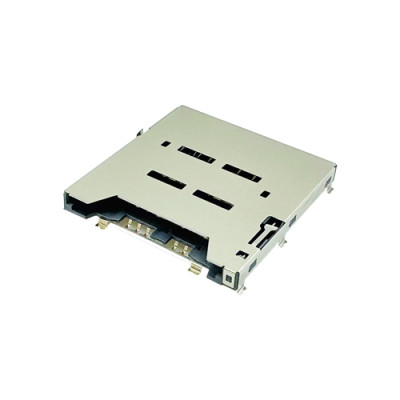
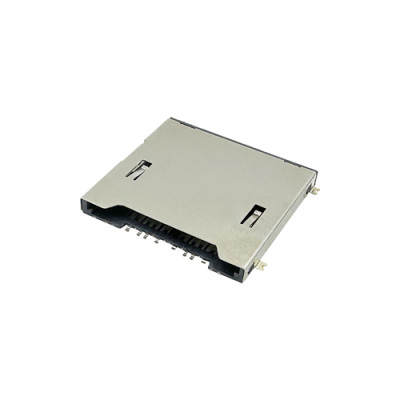
Are you looking for a reliable manufacturer of card connector products?
We can quickly provide customers with market analysis, technical support and customized services.- Phone
- *Title
- *Content