
How Does a Push-Push SIM Card Connector Mechanism Work?
A push-push SIM connector latches the card on the first press and ejects it on the second press using an internal spring-loaded cam — no tools needed. It is the standard choice where cards are swapped frequently.
How the Push-Push Mechanism Works
A push-push SIM connector uses an internal spring-loaded cam: the first press of the card latches it into the locked position and compresses the spring; a second press releases the latch and the spring ejects the card partially, ready for extraction. No tools or fingers under the card are needed.
Push-Push vs Push-Pull vs Push Type
| Mechanism | Insert | Eject | Best For |
|---|---|---|---|
| Push-push | Press to lock | Press again, auto-eject | Devices needing frequent card swaps |
| Push-pull | Press to lock | Slide/pull mechanism | Shock-prone environments, automotive |
| Push type (friction) | Slide in | Manual extraction | Cost-sensitive, rarely-swapped cards |
Selection Tips
- Push-push adds a spring mechanism: verify the connector's insertion/ejection cycle rating (typically 5,000-10,000 cycles) matches your use case.
- For high-vibration products, push-pull or a locking friction type resists accidental ejection better.
- Ejection stroke typically 1.4-2.0 mm; allow clearance in the enclosure for the popped-out card.
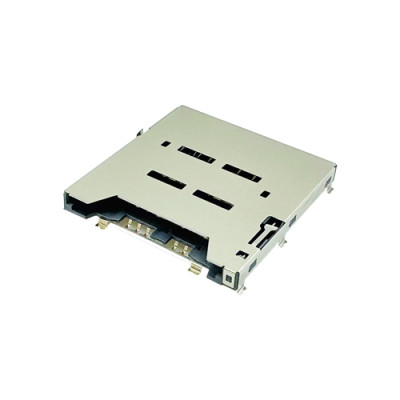
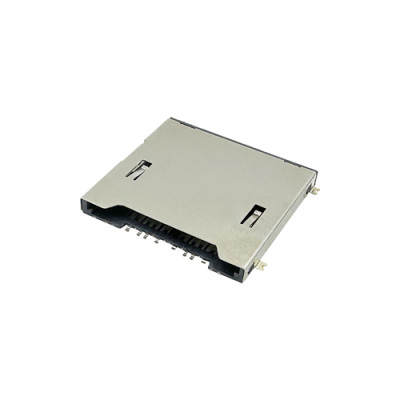
Our 6-pin smart card connector with 2 detection switches (H 2.00mm) and 8-pin version (H 0.45mm) are push-push sockets; see the full smart card connector range.
Are you looking for a reliable manufacturer of card connector products?
We can quickly provide customers with market analysis, technical support and customized services.Please send your message to us
- Phone
- *Title
- *Content